


Tag: MLB
Bits and pieces
 All-Star Game AQI: Very Unhealthy
So, there've been a few things I've been meaning to post about, but time and energy haven't been forthcoming for it. So a disjointed one today and hopefully back to real posts over the weekend(?).
-
ITEM: The MLB All-Star Game was a dud for the 7th consecutive year. I don't know exactly what to suggest for de-dudifying the All-Star Game, other than doing away with the unconscionable home-run derby tiebreaker that marred last year's ASG (some of the best ASGs have been extra-inning affairs, which can never happen again so long as that stupid rule exists). But it would be in baseball's interest to tweak some things. As a friend of mine put it last night, in a way it's amazing anyone gets any hits at all in these games, since every pitcher is elite and they're only in the game very briefly. And this time around, the National League team barely had any, with Juan Soto notching a base hit in the 4th and nothing else until PCA got a hit in the 8th and Otto Lopez lined one in the 9th. One walk in the first, one in the seventh. Zippo otherwise in a year when the NL is far and away the superior league in terms of team strength (of course, the ASG is all about individuals, where there's more parity). Meanwhile, the American League team plated three in the first inning and that was effectively it for the game, after that just a solo homer from Miguel Vargas in the 8th that went by in a blink. We were wondering if this game would set a record for most strikeouts, but no; that happened a few years back in another dud.
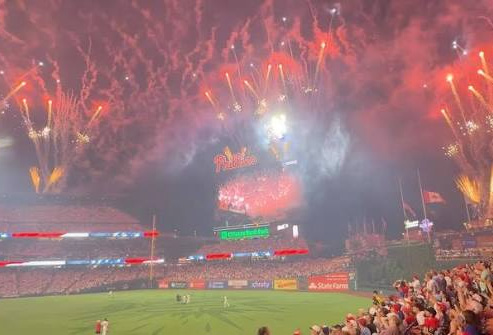
Other than changing the selection process to better choose the participants, I don't know how to fix this, or even if it needs to be fixed, but there are a couple of things I'd like to see beyond obliterating the HR Derby tiebreaker. One, mandate that the starting pitcher pitch at least two innings unless he gets hurt or unless he gets lit up. Then it's actually a bigger deal to be named starter than to just be an opener in a bullpen game. Two, no more mid-game interruptions—in Bud Selig's day we'd get mid-game delays to make a speech or something, these days it's a delay for some sort of stunt or performance like it's a miniature football halftime show. This year it was a video of a bunch of kids riding their bikes to a ballgame followed by real kids riding bikes onto the field, I think as some sort of homage to the film The Sandlot. Also midgame fireworks that flooded the ballpark with particulates and haze. Do that shit before the game or don't do it at all.
Maybe the biggest problem, though, isn't the game itself but the broadcast of the game. It's hard to follow the game as it's being presented to us. Fox Sports has taken to interviewing players—including, this time, both the pitcher and catcher at the same time—while they are actively playing the game, which, OK, can be entertaining in spots but generally is pointless and has to be distracting for the players, in addition to being a sideshow from the game itself. The commentators have interviewed players after they come out of the game forever, that's fine (so long as we can still see what's happening on the field) and less intrusive. But I'd do away with players taking earpieces with them out to the field to chat with Joe Davis and John Smoltz, or whomever takes over play-by-play duty in the future. Not unrelatedly, the Fox crew doesn't reliably let us know when players come into the game, and there are a ton of substitutions going on after the third inning of an ASG (elected starters have to play three frames); many fans are wanting to see "their guy" play, and sometimes we don't know until a ball is hit to his position and we see the guy make a play. "Hey, my guy is in! Wonder how long he's been out there. Could've been two or three innings for all we know." The broadcasters are too into doing their goofy/inane Q&A with players as they're trying to play to really pay attention to much else. We also should get more in the way of graphics and info on the All-Star players; you get some with the starters as the lineups are announced, but a lot of these guys are unfamiliar to the audience outside of their home markets, it'd be nice for the casual fan to see why, say, rookie Tristian Peters made the squad instead of just wondering amongst themselves as we did, "hey who's that White Sox guy, what's his deal?" Do a little graphical info dump when new players enter the game. And John Smoltz is his own category of problem, he's just terrible as a commentator whether it's the ASG or a playoff game or anything else.
We enjoyed mocking the thing here, though.
- ITEM (related): Another quote from Craig. From the "this date in baseball history" section of Craig Calcaterra's newsletter today: "1909 — Ed Summers of the Detroit Tigers allows only seven hits and pitches all 18 innings of a 0-0 tie—the game was called due to darkness—with the Washington Senators. It's the longest scoreless game in AL history. Yet, somehow, it was still far more compelling than the 2026 All-Star Game."
- ITEM: People are dumb, and people with fireworks are super dumb. My umpiring shifts for Capitol Hill games have been/are being moved elsewhere because some idiot set off fireworks on the Cap Hill field's synthetic infield and damaged it to the point of unplayability. That whole set of athletic fields is in need of resurfacing, yes, but until a week-and-a-half ago it was still plenty usable. This happened to a lesser extent last year at the Ballard fields where the Spuds play and we had to navigate our play around a hole between first and second base. Can we just be done with fireworks? They're pretty, but the particulates, the smoke, the noise, the fire hazard, is it really worth it? Drone shows are less damaging.
- ITEM: Spuds done for ’26: Speaking of the Spuddies, we played our playoff game yesterday and it did not go well. Full post on that coming later on, but we were trounced.
- ITEM: The health care system in this country is a joke, part 2,352,091. I had my annual checkup today, and I had to go to a new doctor for it. My prior doc doesn't take the insurance I have now, which I switched to because Republicans made the premiums on the insurance I had the last couple of years unaffordable. So I had to go through the rigamarole of again finding a new primary care doc, which I did a couple months ago and today was the next available appointment I could comfortably swing. So I find my way to the new place, go to check in, and am told this doctor isn't taking new patients, but we can do my annual check. "Wait, what?" This didn't compute with me. "If she isn't taking new patients, why am I here? Why did this appointment even get accepted in the first place?" The reply was gobbledygook that made no sense to me, but I was already there and my Rx is going to run out in a couple weeks, so I said fine, we'll do this and then I'll go through the whole process yet again next time I need to see someone. The nurse/med tech guy was sympathetic when he was getting my vitals and such, and after he left the exam room I heard him explain to the doctor in detail about the scheduling fuckup, and in the end the doc agreed to take me on anyway. It may or may not work out well, I don't really have a sense of her as someone I can relate to. The prior doctor was a good fit, I wish I could've kept seeing her, but we live in the US of A, where everything medical is dictated by what insurance you can afford, because people are stupid and keep electing Republicans.
- ITEM: Felon47 went on TV with his tin-foil hat. The alleged President of the United States, a convicted felon and perpetrator of several frauds that were settled out of court as well as many that have yet to be charged, the most grandiose and prolific liar on Earth, made a "speech" about made-up election conspiracies tonight. He distorted intelligence that we already knew about to make it sound (to him, anyway) like there were rampant issues with foreign operatives that are not the actual issues with foreign operatives which benefit him, he made already-debunked claims of mass-voting by non-citizens. He whined and grievanced his way through a pathetic spectacle intended to do two things: Create support for his pet voter-suppression bill that as it stands has no chance of passing either house of Congress, because he wants to be able to cheat in elections with impunity; and take the news media's focus off of the Iran debacle, gas prices, oncoming economic calamity, the outrageous things said by his unqualified criminal lackey nominees in confirmation hearings going on this week, his Air Force One fuckups, the reflecting pool bullshit, ICE murdering people and getting away with it, RFK Jr.'s direct responsibility for both screwworm and parasites in our lettuce (and the need for me to have gotten a measles vaccination today), deaths in DHS custody, the embarrassing NATO summit, his petulant refusal to sign a bipartisan housing bill that became law anyway (which he may not know), his staff getting caught using inside info to make Kalshi bets, his flip-flopping Strait of Hormuz "policies", a judge slapping him down hard on his "settlement" with the IRS, the Republican push for an unconscionable increase in military funding, his and Pete Hegseth's various war crimes, his illegal harassment of journalists, and the evergreen scandal of the Epstein Files. We can't wait for this maniac's term to run out, we need to elect as may Democrats to Congress as possible, by margins too big for him to cheat against, and remove him ASAP.
Tagged
Baseball,
MLB,
Umping,
Softball,
Politics,
Republicans,
President VonClownstick,
Health,
Craig Calcaterra,
Posted on July 16, 2026 at 8:51PM | Permalink |  |
| 
The Dodgers trash their image as the country descends into chaos
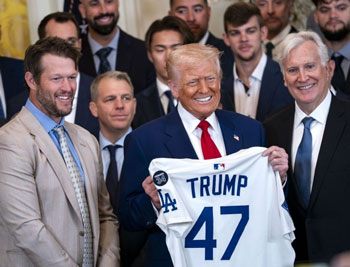 A disgusting image of Clayton Kershaw (left) and Dodger owner Fred Wilpon flanking the most dangerous person in the world and having a blast doing it
The Los Angeles nee Brooklyn Dodgers are a revered franchise in professional sports in no small part because of their association with civil rights. By adding Jackie Robinson to their team in 1947, the Dodgers gave a metaphorical middle finger to the racist mores of the day and began integrating Major League Baseball, and for that the organization deserves accolades. Yesterday, however, the Dodgers spat on that reputation and honorable history by visiting the White House and allowing themselves to be used as propaganda by a hateful fascist white supremacist who likely thinks Dodger manager Dave Roberts doesn't deserve his job and was merely a "DEI hire."
This shameful decision made by the Dodgers not only angers their fan base and brands the team with a staggering hypocrisy, it was also a big swing and a miss on an opportunity to solidify their previous reputation and reach out to new fans and tie "America's pastime" to American idealism.
Imagine if, instead of doing the customary thing of accepting the invitation traditionally given by the White House to the prior year's World Series winners, the Dodgers respectfully declined but then used the time to record a short video of the team visiting other significances in DC.
Picture the video: Members of the World Champion Los Angeles Dodgers in front of the White House, with someone—Roberts or Mookie Betts or Tyler Glasnow or whomever—talking to the camera. "We're here at the White House in Washington, DC. We were invited to visit the president, but instead we're choosing to visit some of the things that actually make America great."
The camera then follows the team around, maybe on one of those open-air tour buses, to the Lincoln Memorial, where we see Betts or Teoscar Hernández reading aloud from the emancipation proclamation engraved there. Other players are seen paying their respects to relatives whose names are on the Vietnam and/or Korean war memorials. A stop at the Capitol building with a brief conversation between a Dodger or three and maybe Senator Adam Schiff or Congressman Jimmy Gomez or Ted Lieu who explain the separation of powers and how they represent the Los Angeles area. Maybe Roberts and some players stroll through the FDR memorial while Roberts talks of his mixed African-American/Japanese parentage and how his existence is a consequence of FDR (and then Truman) winning World War II and that base where his parents met existing in Okinawa. Some other Dodgers recount some personal/family history at the MLK memorial.
We see Chris Taylor and Enrique Hernández and Shohei in the Museum of American History checking out the baseball exhibit and maybe the presidential timeline. A scene with Betts at the African-American History museum. Arlington National Cemetery, maybe the JFK grave; the U.S. Mint, where the players can joke about their contracts; a humorous drive-by of the Watergate hotel; a stop at the steps of the Supreme Court, maybe the Dodger manager makes an offhand remark about how sometimes it sucks to have the same surname as someone else; and a stop at the National Archives—while at the White House, Roberts commented that he was thrilled to get a photo in front of the Declaration of Independence; how much better an image would it be for Max Muncy to show the founding documents to Yoshi Yamamoto and Miguel Rojas but apologize about not being able to see the Declaration of Independence because it's no longer available for public viewing since President Convicted Felon had it moved to the Oval Office because reasons.
Cap it off with the team arriving at Nationals Park for their series against the Nationals and someone else—Clayton Kershaw, Will Smith, maybe Shohei if his English can handle it—summing up the experience with a bit of patriotism and recounting what really makes America great: governance of, by, and for the people, where everyone is equal under the law and all have freedoms under the Constitution. "It's why we can all be here, enjoying baseball together in a free country."
You wouldn't have to even mention POTUS47 if you wanted to avoid "controversy," though I think a brief note that the White House invitation was declined because of who currently lives there and the note about the Declaration of Independence are warranted. Noting at the outset that the team chose to do the video rather than the White House visit might be enough to communicate by implication that it was in protest, but history would look kindly on calling POTUS47 out by name (or title). Especially if they included some LA-centric remarks about the recent fires and the stupid magic water spigot thing and climate change policy.
Anyway, that's what I would have done if I were the Dodgers head honcho.
Instead we have photos and video of Kershaw and Betts and Ohtani and Roberts and others just beaming as they shake the hand of someone who is perhaps the most hated person in the world.
Enrique Hernández said of Dodger fans who were upset with the team's choice to visit this president, "they have the right to an opinion," not quite understanding that the man whose hand he shook would prefer they did not have that right.
Betts said of those fans that it was another instance of being Black in America: "No matter what I choose, somebody is gonna be pissed." I realize that I am not Black in America (or anywhere else) and cannot comment on that greater context with any validity, but I think it's safe to say that in such cases it would be helpful to consider which somebodies would be pissed with which decision; I mean, how concerned are you with pissing off Nazis? Maybe in this climate it's a real concern, maybe you'd rather be on the side fighting the Nazis regardless.
Kershaw was unmoved by criticisms, saying, "At the end of the day, getting to go to the White House, getting to see the Oval Office, getting to meet the President of the United States, that’s stuff that you can’t lose sight of, no matter what you believe." I would argue to the pitching great that what you can't lose sight of is what those things—the White House, the Oval Office, the presidency—represent, and agreeing to visit this President, this autocrat, this fascist wannabe-dictator that stands opposed to those very things, shows that you have indeed lost sight of that.
Tagged
Baseball,
MLB,
President VonClownstick,
Posted on April 8, 2025 at 5:48PM | Permalink | |
Frequent flier miles
As part of the collective bargaining agreement adopted by Major League Baseball and its players' union earlier this year, a number of changes (mostly unwelcome) have come to the game this season and more are coming next year. The most egregious of these, of course, is the "universal designated hitter" rule that began this season, which is a crime against the sport. Other heinous changes include advertising on uniforms, which will either begin this postseason or next season; expanded playoffs, which we will see in a little over a month; and a tripling of the number of games devoted to Interleague-play, starting next year.
That last point became less abstract today when MLB released its tentative schedules for 2023. The new formula has teams playing clubs in their own division 13 times each (down from 19) and clubs from the other two same-league divisions six or seven times each (roughly the same as now), with the remainder of the schedule devoted to Interleague—teams will play every team in the other league three times, four in the case of its so-called "rival team." (One issue I can't figure—why 13 per intradivision team? Make it 14, take the those four games out of the same-league interdivision mix, which has seven games against four teams and six against the other six; make it equitable all around. That wrinkle is just dumb.)
As a concept, I don't object to this, at least not any more than I object to Interleague play generally; I preferred it when the leagues were contained unto themselves and only met at the All-Star Game and the World Series. Since it came into existence in 1997—as a gimmick to sell more tickets in the wake of the disastrous work stoppage of 1994, which itself was supposed to be the first year of expanded playoffs that were designed to be a gimmick to sell more tickets—it had been limited to 15-20 games ostensibly limited to a single division; greed got in the way of fairness, of course, and over the years it was tweaked to give extra games against opposite-league teams that sold more tickets in the major markets. The new norm of 46 Interleague games is much more suitably apportioned, with only one Interleague game differing from team to team; the current setup has been absurd when looked at in terms of competitive fairness for winning a title, so in a lot of ways the new system will be better.
Still rankles me a little, though.
Being a more-or-less traditionalist when it comes to baseball, I am sad to see the death of the two separate and distinct major leagues. Really, that kicked in this year with the metastisization of the DH cancer to the National League, but the new schedule just underlines the point. The American and National Leagues are mere labels now, the slow merger into one entity (which began in the '90s) is complete. So that's one thing.
The other issue I have is how it affects my hometown Seattle Mariners.
Just by nature of geography, the Mariners already travel a lot more than most teams do. Occasionally a schedule will have the Oakland A's or the Not-Really-Los-Angeles-You-Don't-Fool-Me-I-Know-You-Play-in-Orange-County Angels traveling more miles over the course of the year, but usually it's the M's. Seattle is an isolated outpost far from every other team's home, it figures they'd have the biggest travel burden. So I was concerned that the new normal would eliminate road trips to California and Texas in favor of more east-coast trips, and adding even more travel to the already well-traveled Mariners could be detrimental. But that's not going to be the case.
Looking at the ’23 draft schedule I see the number of road trips remains the same at 11. The M's make five trips to the Eastern time zone (one of which is Cleveland after Chicago then home, not bad; another ends with a stopover in Oakland on the way home, which isn't great but is probably better than shoehorning that Oakland stop in elsewhere) and six to the Central, most of which are paired with Pacific Time stops on one end or the other. And there are no instances of backtracking weirdness like they had in 2019, when they had trips that went Seattle-Anaheim-Minneapolis-Oakland-Seattle and Seattle-Dallas/Ft. Worth-Chicago-Houston-Seattle. The closest one to something like that in the ’23 grid is Seattle-Kansas City-Houston-Chicago-Seattle, which seems not as dumb/wasteful. Otherwise, all of the trips make geographic sense; ideally, of course, you would pair the visit to Phoenix with a stop in San Diego or Anaheim instead of Minneapolis (July 24-30), play in San Francisco back-to-back with a stop in Oakland, and get the Rangers and Astros on one jaunt. But it's a mess getting every date to fall into place with 30 teams, so I guess this is OK.

All told, we get a season sum of 49,007 miles flown. More than this year's just-over 47,000 and last year's 48,400, but not as bad as I thought it'd be. In 2014, the Mariners' schedule had them flying 51,500 miles; I figured it would be that every year now. Glad to be wrong.
One other good thing: despite the news media calling it a "balanced schedule," it remains division-weighted, which I consider a necessity. For a while there, MLB used an actual balanced schedule (mostly) which made standings in a division artificial. At least this plan continues to make it meaningful to be a division champ. Now, if we could just get Commissioner Manfred and company to change the stupid new playoff format that lumps a division winner in with Wild Card teams to one that respects the division flag...
Tagged
Baseball,
Seattle Mariners,
MLB,
Posted on August 25, 2022 at 1:38AM | Permalink | |