


Tag: Baseball
The offseason of suck
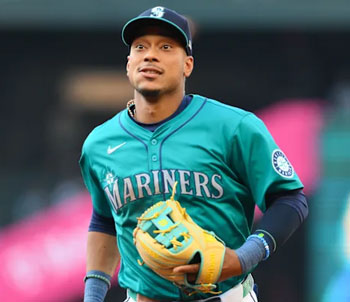 He's baaaaaack...
The atrocities of the POTUS47 administration continue today, of course, that's just a given now, but we'll talk about those later. For the moment I turn my attention to the failures of the Jerry Dipoto regime with Your Seattle Mariners.
The Mariners, who have finished three of the last four seasons no more than two games out of the playoffs and made it in by the skin of their teeth in the fourth, have severely underachieved in this, the alleged "window" for contention envisioned by Dipoto when he began tearing down and remaking the roster after the 2018 campaign, and it's not hard to see why: the offense has been obsessed with launch angles, exit velocities, and other Statcast-era nonsense and neglected the basics. Had they been even just a little bit more competent with fundamental offensive tactics (e.g. scoring a runner from third base with 0/1 out), they would have won anywhere from three to ten more games in each season, plenty to score a playoff berth.
Finally, finally, moves were made late last season to replace manager Scott Servais and alleged batting coach Jarred DeHart and results were positive (.618 winning percentage post-change); but it was too little, too late for that year and hopes were placed on a carryover from the new guys and some roster improvements for 2025.
Following the ’24 season, a decision was made to cut loose three quarters of the infield. Only shortstop J.P. Crawford would remain, the other spots would be upgraded. Not a bad idea, as Josh Rojas (though inexpensive and versatile, letting him go was slightly iffy), Jorge Polanco, and Ty France all had poor years, combining for an on-base mark of just .303 and a 26% K rate. (France's replacement late last year was Justin Turner, who did well enough, but he wasn't brought back either.) France I still believe will produce, for whatever team he ends up with, now that he's out from under the yoke of the useless DeHart, but regardless there were three holes to fill.
Then nothing happened.
Attempts were clearly made to acquire upgrades at the infield corners, at least, but all failed. Ownership has hamstrung Dipoto with a strict budget, so free agent options were nearly nil; dreams of landing Pete Alonso or Christian Walker were never viable. Trade offers, like one for Phillies 3B Alec Bohm or another rumored to have been for the Cubs' Nico Hoerner, were all countered with requests that were unreasonable and/or unaffordable. And now we're just a couple weeks away from the start of Spring Training and have to take what's left in the remainders bin.
As one of the softball players I was umpiring last week put it, this has been the "offseason of suck."
Today came what reads to me like an official declaration of surrender, as instead of getting any sort of upgrade the M's re-signed Polanco—whom no other team really wanted (marginal interest from the Yankees and Astros in a kick-the-tires kind of way)—for another year with a vesting option for 2026. Polanco's 2024 line of .213/.296/.355 hardly seems to justify his 1.3 WAR rating (I will never fully accept/understand Wins Above Replacement as a legitimate stat given its inherent subjectivity) and there is no split for which he put up decent numbers unless you count "ahead in the count," which is a split that favors everyone.
But Polanco was apparently the best Dipoto could do at this point with his limited financial flexibility. The hope now is that last year was a down season for him because of nagging minor injuries he was playing through and that he's over them now. And, of course, having Kevin Seitzer as batting coach instead of negative-impact-DeHart won't hurt.
The M's are also moving Polanco to third base, a position he has played for just 2% of his time as a big-leaguer. That seems like a dubious choice, but again, who else is there? (And he might be OK there defensively as the M's have the god of infield coaches in Perry Hill, he who turned error machine Eugenio Suárez into a stellar defender at third.)
So, here is your likely Mariner lineup for 2025, at least to start:
- Victor Robles, RF
- Julio Rodríguez, CF
- Randy Arozarena, LF
- Cal Raleigh, C
- Mitch Haniger/Dom Canzone, DH platoon/OF rotation
- Donovan Solano/Luke Raley, 1B platoon
- Jorge Polanco, 3B
- Ryan Bliss, 2B
- J.P. Crawford, SS
Dylan Moore, Mitch Garver on the bench with the non-starting platoon partners
I'm not saying this is terrible. It actually has the potential to be a solid group, but only if Seitzer works some coaching magic and manager Dan Wilson continues to get his guys to play as a team rather than as swing-for-the-fences solo artists. But it is a failure in that the goal was to upgrade the roster, and what we have is exactly the same group minus Rojas & Turner and plus Solano.
Is this another failed gambit by Dipoto or is it fairer to put the blame on tight-fisted ownership that wouldn't open their wallets? Or will it pan out that the restrictions were fine and this group turns everything around thanks to Wilson and Seitzer being that much better than Servais and DeHart?
I'm optimistic. But not as much as I'd have been if the M's landed a third baseman with a consistent record of getting on base more than 30% of the time.
Tagged
Baseball,
Seattle Mariners,
Posted on January 30, 2025 at 8:59PM | Permalink |  |
| 
Miscellany
 Weird but fun, Interior Chinatown is worth a watch
Today's post: A random assortment of disjointed stuff!
- The dishwasher saga is over, with a new one purchased, delivered, and installed and the old one carted away to whatever scrap heap such things are taken to. I hadn't initially planned to replace the broken one so quickly, but holiday sales at Lowe's convinced me I was better off spending $600 now, on a good one on sale, than later on a cheaper one at regular price. It works, it's quiet, and most importantly, it doesn't leak into Rachel's kitchen downstairs.
- I've spent a chunk of time doing maintenance on this here website, including recreating the sketches page and beginning to populate it with stuff readily available, i.e. mostly stuff from the last few years that was either already scanned into my computer or at hand in my currently in-use sketchbook. There's other stuff in my hard drive already digitized, things that were on prior versions of my blog, but they were posted in the olden days of the Internet when nobody had a screen resolution bigger than 800 pixels and are thus pretty lousy scans. I'll have to find the originals and rescan them at some point. Anyway, the current format has clickable icons that produce a fullscreen image and a button to continue to "notes and comments" that takes you to a page for that individual sketch and any blathering I may have done about it, plus a commenting form just like a blog post. Click anywhere other than the button to close the fullscreen image and return to the sketch menu.
- I had my Christmas the other night at K&E's place, enjoying delicious food and talking about the world and also TV. All three of us love the Hulu show Interior Chinatown, starring Jimmy Yang and Chloe Bennett. It's a wacky comedic sendup of action movies, the Law & Order franchise, and meta-storytelling that takes place both within a Law & Order-style TV show and around a mild-mannered Chinese-American's family in a fictional Chinatown neighborhood. Recommended. We also agree on the greatness of Michael Schur's A Man on the Inside (Netflix), which I discussed briefly earlier but deserves a second recommend. The Diplomat (Netflix) also works for all of us, and we commented on the overlap of cast and crew from The West Wing on it (even though neither of them have ever really watched West Wing, which is really a bummer for them). Shrinking (Apple TV+) wasn't something they'd seen but which I think is terrific; they liked Slow Horses, which I've not sampled to this point. I'm very much into Silo (Apple TV+) and, naturally, the just-concluded (boo) Star Trek: Lower Decks, but know better than to try to convince K&E to watch those.
- I was gifted the book What's Next on that early-Christmas evening, and though I've yet to start into it, I am anticipating some great West Wing reflections and truly wonder how it will feel to revisit the details of the fictional Bartlet Administration while living in the impending nightmare of Trump 2.0, Now With More Oligarchy.
- I just learned that baseball Hall of Famer Rickey Henderson died today. One of the all-time greats, Rickey was a fantastic character with is arrogant self-assuredness, his speaking in the third person, and his generosity to others. Despite being exactly my kind of ballplayer—the stolen base king! Consistently walked more than struck out!—he was never one of my favorites, maybe because he took the steals record away from one of my faves, Lou Brock, or maybe because he spent his career primarily with the Oakland A's and the hated New York Yankees. He did spend part of one season in Seattle as a Mariner, in 2000, in the waning days of his very long career, and was always fun to watch no matter who he played for. My two favorite Rickey Henderson anecdotes come from other players. One, from former Seattle Mariner Harold Reynolds, who won the stolen base crown in 1987 with 66 steals (because Henderson was injured that year) and got a postseason call from Rickey congratulating him but also containing Rickey-style mockery, with Henderson ending the call with "Rickey would have had 66 by the All-Star break." Two, from fellow Hall of Famer Mike Piazza, who was Rickey's teammate with the New York Mets; Piazza recounted how Rickey voted when teams would be divvying up the postseason bonuses among the support staff. “Rickey was the most generous guy I ever played with, and whenever the discussion came around to what we should give one of the fringe people—whether it was a minor leaguer who came up for a few days or the parking lot attendant—Rickey would shout out 'Full share!' We’d argue for a while and he’d say, 'Fuck that! You can change somebody’s life!'” Apparently Rickey died from pneumonia, less than a week shy of 66 years old. Bummer.
- Earlier this week, Craig Calcaterra referenced a Washington Post article called "America's Best Decade" in his newsletter. The article analyzes results from polling 2,000 American adults on which decade was best for 20 different things, like best movies, best economy, best music, best reporting, and so on. There are some interesting (though not surprising) things, like Republicans are twice as likely to think the 1950s were awesome as other people are (hey, Republicans, that being the case, let's go back to the 90% marginal tax rate that existed then, which made for a lot of the circumstances you say you want!), or that people think the "best music" is the music they listened to in their formative years. But Craig's takeaway was surprise at the generational consistency of people liking their own youth (not just the music, but everything). "Americans feel nostalgia not for a specific era, but for a specific age," says the article. "The good old days when America was 'great' aren’t the 1950s. They’re whatever decade you were 11, your parents knew the correct answer to any question, and you’d never heard of war crimes tribunals, microplastics or improvised explosive devices." There's a handy graph to illustrate:

If they'd polled me, I might have skewed the results just a smidge. I mean, if I followed the pattern, I'd have my bests coming in the 1980s, and frankly there was a lot about the ’80s that wasn't all that. I mean, sure, those years were largely good for me (well, not ’89), but thinking big picture not so much. I'd say... Best Music? 1970s. Best Movies? I'm not really big into movies like some people, so I don't have a real feeling on this, but I guess the 2000s? Best Fashion? Hell if I know, but certainly not the ’80s; maybe the ’60s, since it spanned a lot of stuff. Happiest Families? Again, WTF do I know, but I'd say maybe 1990s since (a) women had far more agency than in prior decades, and (b) economically things were stable and good throughout. Most Moral Society is a question that inevitably tracks one's politics and I'd be tempted to say the 2020s if not for what happened last month to show us how many millions of Americans are still racist, misogynist, cruel asshats. Most Reliable News Reporting? 1970s again, though it really depends on how you quantify; there's a lot of fine reportage more recently, but also increasingly widespread BS from the dawn of cable TV forward. Best Economy? 1990s. Best Radio? I've no proper context for this, but given how much more radio was a thing the further back you go, maybe the 1940s or ’50s? For me, again the ’70s. Best TV? Right now, man. So much great TV being made even as the TV delivery system is transmogrifying. Least Political Division? Um...never? I mean, now is the worst in ages, but there's always been a lot; maybe the ’40s, what with the war being a unifying purpose. Best Sporting Events? For me, that's limited to baseball, really, and in this area I fit the trend—1980s baseball was great and I wish we could exhume Bart Giamatti to be Commissioner again. Best Cuisine seems like a dumb category, as food doesn't change, really, it's how we eat that changes. I like good food whenever it's eaten. Anyway, kind of an interesting survey.
Tagged
Site issues,
Politics,
West Wing,
Baseball,
TV,
Craig Calcaterra,
Posted on December 21, 2024 at 8:37PM | Permalink | |
Little of this, little of that

“We’ve been in the Void for over a decade, Kamiko.”
“Maybe it’s for the best, Ted, things might be a shitshow out there.”
I'm not coherent enough this evening to put together a "real" post, so I'm figuring to do a kind of potpourri of fragmented thoughts about whatever. Because getting some stuff out of my head seems helpful even when it's scatterbrained.
- First, a brief update on my headspace: The crash-and-burn of the previous post isn't quite in the rear view yet; I'm still climbing out and it's a slower process than I thought it was going to be. I think this is one of those circumstances where it hurts me not to have a day job. Maybe. Anyway, getting going in any given day is still a challenge and sometimes doesn't happen until it's safe outside for vampires and then my tendency to be awake all night reinforces the pattern. Work in progress.
- We had a "bomb cyclone" come through the area the other day and I was without power for not quite 24 hours or so. This also did not help my headspace because without electricity there wasn't much to do during the nocturnal hours I tend to find myself most awake. There's only so much reading one can do by candle illumination and awkwardly-held flashlights. No other inconveniences for me personally, but some folks in the (not-immediate) area had a lot of damage to contend with from wind and toppled trees and such. The rain's been pretty steady ever since, though, and whenever I go out to get the mail I half-expect to see someone building an ark in their driveway.
- Michael Schur is good at TV. I mean, we knew this already, he's not only half of the great PosCast about sports and nonsense, he's also the brains behind The Good Place, Parks and Recreation, and other such things that step up the level of quality and thoughtful humor on television. His latest show is called A Man on the Inside, and it's delightful. Ted Danson stars (with small roles for a couple of other Good Place alums and another for Eugene Cordero) as a widower in need of something to do who gets hired by a private detective to infiltrate a retirement home and be the "man on the inside" in an effort to catch a thief. It's only eight episodes, I watched them all last night. Charming, witty, poignant . . . you know, a Michael Schur joint.
- The Seattle Mariners are cutting ties with a couple of players I'd rather not see them cut ties with. Makes me wonder what they think their doing or if they have any sort of plan. Anyway, today they non-tendered (and thus cast to the free agent winds) both Josh Rojas and Sam Haggerty, two of the only bright spots in the non-pitching portion of the 2024 team. Haggs is recovering from a bad ACL injury and this seems an especially heartless thing to do to him since being with an organization when rehabbing and such can make a huge difference, both in terms of available facilities and financial security (though unless he's squandered it, he's made plenty of money by regular-people standards the last few years even though he's a pauper by professional athlete standards). Haggerty can play seven positions on the field and switch-hits and is the best baserunner in baseball right now (well, not right now, but when he has two working ACLs). And he's inexpensive. Why let him go, just to save a tiny-by-MLB-payroll-standards amount of money? Hard disapprove, Mariners. Rojas surprised me last year by being actually pretty good both as a third baseman and as a batter, though the bar was low; I'd thought of him as the least valuable piece received in the Paul Sewald trade the year before and he proved to be capable. Rojas isn't a key piece of the puzzle, granted, but still sad to see him go. And, this creates a new vacancy to fill—before today, Rojas figured to be at least a platoon partner at one of two infield positions; now, both the second base and third base positions have no one ready to step into them. Unless they're counting on Dylan Moore to fill one, which, ugh. No, thank you. (Or they think Ryan Bliss is ready to be an everyday big-leaguer? Mmmmmayyybe? I mean, good on-base chops in the minors, but all we saw of him with the M's was during the Scott Servais/Jarred deHart reign of error, so who knows.) Dropping these two is another cost-cutting maneuver, saves them maybe $6M in player payroll, but to what end? I guess we'll wait and see.
- Including those Cloud Five strips in my last post (and, yes, I know the C5 site is broken, it's been so for a while now, I just haven't been motivated to fix it) has made me think seriously of reviving it, but if I do I'm not sure what to do about the intervening 11 years or so. I mean, a lot of shit's gone down. Do I age the characters up and just drop into today? Do I pick up where I left off and pull a Newsroom and treat the now of the strip as 2014? Do I do both, do any picking-up-from-before in flashback? Or is it better to just start form scratch on a new thing? Or am I not willing to do that format again? I don't know. It's a big thing to take it up again in any form. Meanwhile I'm just doing some unrelated sketching, which is better than nothing.
Tagged
The Black Hole,
Baseball,
TV,
Seattle Mariners,
Posted on November 22, 2024 at 9:58PM | Permalink | |
World Series notes
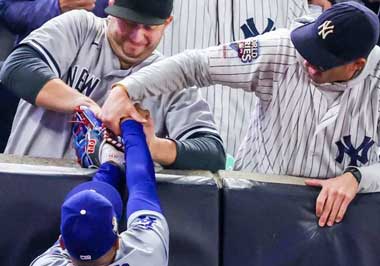 How stereotypes are made
The New York Yankees staved off elimination for a day by winning World Series Game Four last night. They did so despite falling behind early on yet another home run from Captain Marvel Jr. and with no help from two guys in the right field seats that stole a foul ball out of the glove of Dodger right fielder Mookie Betts.
You will occasionally see a fan reach into the field of play to catch a ball; you will occasionally see fans and players both angling for a catch once a ball clears the wall and enters the "out of play" territory. You never, until last night, expect to see fans grab a players arm and pry a ball out of his glove. Only in the Bronx, man.
Those guys, who have been banned from attending the remainder of the World Series, give form and substance to the generalized image of the Yankee Fan: Obnoxious, rude, hostile, selfish, and all that is wrong with humanity. Well played, asshats. From The Athletic's account of the theft:
Austin Capobianco, 38, from Connecticut, was ejected after the incident in the first inning of the Yankees’ 11-4 win in Game 4 on Tuesday night. Another fan, who ESPN identified as John Peter, was ejected alongside Capobianco.
...
Darren Capobianco said his brother, Austin, is a Yankees season ticket holder. A team spokesman said that it has not been determined what — if any — further action will be taken regarding the future of their tickets. Austin Capobianco didn’t respond to text messages from The Athletic seeking comment Wednesday morning.
After the play, Capobianco tried arguing with stadium security that Betts’ glove had reached into foul territory.
It's that last bit that was really the chef's kiss of Yankee fan assholery, visibly arguing with stadium security that because Betts had reached into the seating area to catch the ball, he as a fan was entitled to forcibly pry Betts' glove open and steal the baseball. I looked for a still photo of the argument but couldn't find one; it was only on the Fox TV broadcast for a second or so, because Fox is terrible at broadcasting baseball.
Several times in this World Series has there been something of relative import happening on the field that the Fox crew—including the announcers, Joe Davis and John Smoltz, and either the director or the camera operators—failed to notice or acknowledge. Game One had the catch-and-throw by the Yankee outfielder that resulted in runners being awarded a base that you'd only be aware of if you (a) knew the rule about having to reenter the field of play before throwing the ball, and (b) saw the gesticulations of the third base umpire in the background of the camera shot in the second or so it was onscreen. Game Two had something I now don't remember the details of but commented on in real time, Game Three had a defensive replacement we weren't made aware of, and last night there was several seconds in which the home plate umpire was having a confrontation with someone about something, but damned if anyone watching the broadcast knows what it was about or who the confrontation was with because the Fox director chose to keep the closeup shot of Garret Cole in the dugout onscreen for the entire time.
Also, Smoltz is ridiculously bad at this. It is fun when the players will do something 180° from what Smoltz said would happen a second prior, but really, dude, finish a thought rather than just let things hang there and maybe be less oblique when you reference something from your pitching career. Or just keep quiet, that'd be fine.
I am rooting for the Dodgers in the Series, but kind of glad the Yankees won last night because (a) more baseball is always good; and (b) the Dodgers went in with a planned bullpen game, and bullpen games when they are not necessitated by immediate circumstance are stupid and any team that deliberately plans to have one—or several!—in the postseason deserves to have it bite them in the butt.
LA is heavily favored tonight despite the fact that Cole will be pitching for New York because history decrees it to be so. Never, in 122 years of World Series (two years there was no Series played), has a team that lost the first three games come back to even force a Game 6, let alone brought it to the maximum length, let alone come back to win. They just became only the third such team to win Game 4. Still, to quote Mr. Spock, "for everything there is a first time," so all hope is not lost for those jerks in right field.
Tagged
Baseball,
Yankee fans,
Posted on October 30, 2024 at 3:36PM | Permalink | |
Game One
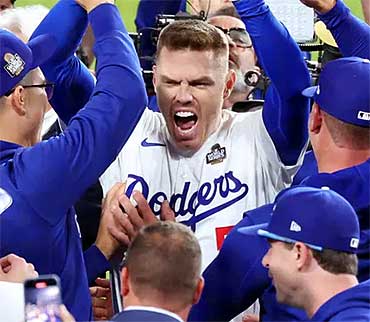
This was one for the ages.
For the first time in a good many years [checks baseball-reference.com—just since 2013, not counting the mini-season of 2020, not as long as I thought] the World Series is between the teams with the best regular season record in each league, the first time in Commissioner Rob Manfred's even-more-playoff-teams era that no Wild Card teams are involved, and the first time since 1981 that the TV network got their dream matchup of bicoastal big market clubs the Dodgers and Yankees.
That last point is only important to marketers and Manfred (who is nothing but a money-grubbing shill of the highest Ferengi order), but the others are good indicators that we were going to get a solidly competitive Series, and, boy, did Game One deliver.
Scoreless through four and a half innings, Los Angeles finally broke through with a triple by postseason god Enrique Hernández and a sacrifice fly from Will Smith. Then the Yankees immediately came back when ALCS MVP Giancarlo Stanton crushed a two-run homer in the 6th off an inside-half-of-the-plate curveball with little to no break, no doubt causing Michael Schur—the great TV writer and co-host of The Poscast—to unleash a torrent of screamed obscenities at Dodger pitcher Jack Flaherty, who blithely ignored Schur's scouting report. That report has helpfully been transcribed by my friend and fellow Poscast listener Erik, please to enjoy and perhaps forward to Dodger manager Dave Roberts.
Mookie Betts drove in Shohei Ohtani with another sac fly to tie it in the 8th, and we went to extra innings at 2-2. New York took the lead in the top of the 10th thanks to a single, steal of 2nd, steal of 3rd, and hard grounder to short that was oh-so-close to being an inning-ending double-play. Then in the home 10th the magic happened.
Flyout. Walk. Single. Yankee manager Aaron Boone makes a pitching change, opting to bring in one Nestor Cortes. Cortes, the onetime truly awful Seattle Mariner but somehow great starter for two years in the Bronx before reverting to the mean, was fresh off the injured list, having had a flexor tendon issue and was appearing in a game for the first time in a month. Curious choice. Cortes' first pitch was a hanger he got away with, as Ohtani fouled out thanks to a fine catch after tumbling into the seats by New York left fielder Alex Verdugo—which still went marginally against the Yankees because Verdugo threw the ball back before returning to the field of play, which is illegal and awarded the runners an extra base, not that anyone watching the telecast knew that unless they were very keen-eyed and caught third-base umpire Mark Ripperger's gestures upon Verdugo's throw since Fox broadcasters Joe Davis and John Smoltz were blissfully unaware and said nothing about it and the broadcast's director chose to stay with closeup camera shots that excluded the baserunners and the onscreen graphic didn't change from showing runners first and second to runners second and third. The Yanks then intentionally walked Mookie Betts to load the bases for Freddie Freeman with two out (a questionable move, but I agreed with it from the New York point of view; the mistake had already been made by bringing in Cortes, first base was vacant thanks to Verdugo throwing the ball back from the stands on Ohtani's foulout, and bypassing Mookie for a lefty-lefty matchup and a slower batter-runner made sense). Cortes' second pitch was a midrange fastball to the lower-inside portion of the zone, aka the lefty happy zone. Belted into the right field bleachers for a game-ending grand slam homer. Pandemonium ensued at Chavez Ravine.
While reminiscent of 1988 Game One, with the iconic Kirk Gibson walkoff homer, this one was probably more exciting all the way from start to finish. Classic.
Game Two tonight. Rodon vs. Yamamoto. Advantage LA.
Tagged
Baseball,
Posted on October 26, 2024 at 11:08AM | Permalink | |
Karen's ex-Mariner playoff post
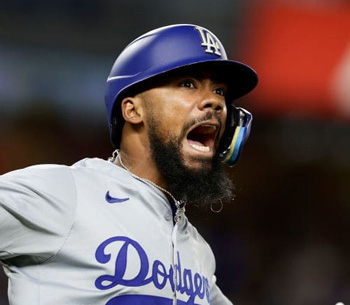 Teoscar Hernandez
My friend Karen is a relatively new baseball fan. She's always been interested enough to occasionally accompany me to Seattle Mariners games and such, but in earlier years she'd bring reading material and ask things like, "which ones are the Mariners?" Nowadays, she's into it. Hell, she might even understand the infield fly rule better than a lot of the softball players I ump games for. It's a wonder to behold and I love her for it, among other reasons.
Every postseason, though, the newly-minted Mariner fan is almost always on the outside looking in (2022's brief foray as a Wild Card entrant aside) and may not have a rooting interest. Karen's requests have often been to know who in the playoffs used to play for Seattle, so here now is the 2024 rundown of ex-M's still playing in the post (teams already eliminated in the Manfred WC Round have been skipped).
New York Yankees (2/4)
 The evil empire does not deserve your support, but they nonetheless have two active and two inactive former Mariners:
- Luke Weaver (RHP): Weaver appeared in five games for Seattle last season and was terrible. He'd been cut by Cincinnati, where he'd also been terrible, then after his five game audition here was waived and claimed by the Yankees. He has been unaccountably splendid in pinstripes, posting a sub-3.00 ERA and a sub-1.000 WHIP out of the bullpen this year.
- Nestor Cortes (LHP): You may remember Nestor from the abbreviated 2020 mini-season, when he suited up for the M's and was abysmal in just 8 innings of play, posting an ERA of 15.26. A Yankees draftee, he had been taken by Baltimore in the Rule 5 draft in 2018, debuted for them and was bad, then had to be sent back to the Yankees when the Orioles cut him. He was bad for the Yankees too, so they traded him to Seattle for the ever-popular "cash considerations." After his dismal mini-season here, he went back to New York as a free agent and was somehow awesome for two years before regressing a bit to be a fair-to-middling starting pitcher.
- Not on the active roster are LHP Anthony Misiewicz, who debuted with the M's in 2020 and left in 2022, traded to Kansas City for those cash considerations again; and OF Taylor Trammell, a former top prospect who hasn't managed to stick in the bigs either in Seattle, where he broke in in 2021, or with the Dodgers or Yankees, each of which claimed him off the waiver wire.
Cleveland Guardians (1)
 Not counting manager Steven Vogt, who served as a coach for Seattle last year, Cleveland has but one ex-M and you'd be forgiven for thinking there were none:
- Matthew Boyd (LHP): Boyd spent the bulk of his career in Detroit, but had two forgettable months as a Mariner in 2022, arriving in a trade with San Francisco. He pitched well, appeared in ten games in relief down the stretch and then went back to Detroit as a free agent.
Kansas City Royals (1/2)
 I'm making a supposition about there being one active former M here, it's entirely possible both will be left off the roster:
- Adam Frazier (IF/OF): Once a highly-coveted All-Star second baseman, now a struggling utility player in sharp decline, a decline that, of course, started when he came to Seattle in 2022. After his one season here he went to Baltimore, where he continued to underwhelm, and this year to KC, where he barely managed to crack a .200 batting average.
- In the minors most of the year was RHP Dan Altavilla, who was a cog in the Seattle bullpen from 2016-2020, when he was dumped on the Padres in a get-him-off-of-Scott-Servais'-relief-menu-before-he-loses-more-games move. He's been mostly injured since then, but the Royals took a flier on him and he did sort of OK for them in Triple-A.
Detroit Tigers (1)
 The mostly-anonymous Tigers are almost entirely guys nobody outside the state of Michigan has ever heard of, excepting pitcher Kenta Maeda, who is known from Hiroshima to Minneapolis. But there is this guy:
- Will Vest (RHP): Not just a contractual pun, this reliever came to Seattle as a Rule 5 draftee from Detroit in 2021. But the M's couldn't keep him on the roster and he had to be offered back to Detroit, where for the past two seasons he's been a more than serviceable option out of the bullpen.
Philadelphia Phillies (1)
 Other than the Mariner-adjacent Aaron Nola (brother of Austin), there's little to link the Phils and M's. Except:
- Taijuan Walker (LHP): Traded away from Seattle in a deal that ended up having four All-Stars in it (Walker and Ketel Marte to the Diamondbacks for Jean Segura and Mitch Haniger), Walker was hurt for most of his time in Phoenix, briefly went to the Blue Jays, came back to Seattle for part of the 2020 mini-season, and then had success in Queens with the Mets. This is his second year with the Phillies and he's been splitting time between the starting rotation and the ’pen.
New York Mets (4)
 The Metropolitans have the most former Mariners in the tournament right now with these guys:
- Edwin Díaz (RHP): Electric Eddie, the pehnom closer that was dealt to New York as the price of getting out from under Robinson Canó's contract after the 2018 campaign, has been pretty good this year after missing all of 2023 on the injured list. Not elite-level good, but still pretty good.
- Jesse Winker (OF): Making friends everywhere he goes, Winker was by some accounts a toxic presence in the Mariner clubhouse after coming here with Eugenio Suárez from the Reds in 2022. He lasted just that one year here and was traded to the Brewers, where he hit all of .199 and was soundly booed by the Milwaukee faithful. This year he started in DC with the Nationals and then got himself shipped out to the Mets in July. His OBP for the year is respectable, but most of that came in Washington; as a Met he's gotten aboard at just a .318 clip.
- Luis Torrens (C): After arriving in a big trade with San Diego in 2020, Luis saw a lot of action as a backup catcher with the M's in ’21, a bit less in ’22, then left town for ’23, when he played for three teams before finding himself back in Seattle's system for a couple of months. This season he started off at Triple-A with the Yankees before getting picked up by the Mets, for whom he's played sparingly as catching insurance.
- Ryne Stanek (RHP): "Panic," as he's affectionately known here at StarshipTim, started this season in Seattle and was... let's say, unpredictable. He'd often be called upon in key situations and would as often as not blow things up. He was thankfully traded to the Mets in July, and he's been even worse for them (6.06 ERA in 17 games).
Los Angeles Dodgers (2)
 Just two? Somehow I thought there'd be more, but no, just these guys:
- Teoscar Hernández (OF): Not asked back after he struck out 211 times for the M's last year, Teo was an All-Star in LA this season. He was even better after the All-Star break and really poured it on down the stretch, posting a line of .329/.407/.605 since September 1st.
- Chris Taylor (IF/OF): Yeah, he's still there. A useful but not flashy cog for the M's in 2014 and ’15, Taylor was shipped off to the Dodgers in early 2016 for a used rosin bag or some such return; he went on to become a key part of several Dodger teams as a super-utility guy playing six positions and holding his own at the plate.
San Diego Padres (0)
 This is just weird—you'd think with all the wheeling and dealing that has gone on between the Padres and Mariners over the past few years that there'd be someone here, but there's not. Carl Edwards Jr., who had a very brief Mariner tenure in 2020, appeared in one game for San Diego this year. That's it.
So there you have it. Factor it into your rooting interests however you like, but I think I'm just going to be rooting for individual players. Shohei. Steven Kwan. Bobby Witt Jr. Maeda. Anyone with Kansas City that can take down the Yankees.
Tagged
Baseball,
Seattle Mariners,
Posted on October 4, 2024 at 11:19PM | Permalink | |
The Veep Debate and Wild Card Playoffs
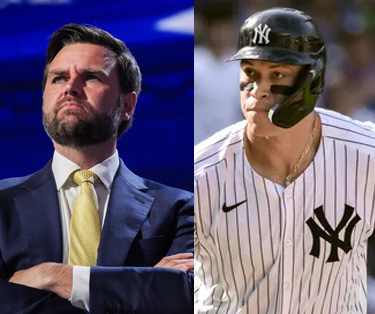 Left: Literal evil. Right: Metaphorical evil.
I really tried to watch the whole thing.
Well, "really tried?" I mean, I could have pushed through. I chose not to for the sake of my blood pressure and my downstairs neighbor, who was probably sick of my screaming "go to hell you lying son of a bitch/smarmy troll/piece of excrement" etc. every two minutes or so.
But I turned it off, "it" being the so-called debate between Vice-Presidential nominees Tim Walz and J.D. Vance. Had I kept on, I would have seen Walz be better; early on he was obviously nervous and appeared out of his depth, but I know from post-debate analysis and the slew of clips that made it around the Internet and cable news that he improved markedly in the second half. Had I kept on, I would also, however, continued to see Vance pour on the bullshit in such a slick, phony faith-healer way, with an abundance of the sort of charm you might find in a sociopathic used car dealer determined to have you drive this lemon off the lot and be happy you did it.
Vance is like a lot of modern-day Republicans in that he can seemingly get away with saying the vilest, most repugnant things so long as he says it in a calm, thoughtful-sounding tone. The film Vice captured this in its portrayal of Dick Cheney, but it's the same schtick you hear form Bill Barr, Kevin McCarthy, even Steve Bannon (though his weird triple-shirts get in the way of seeming sane). But there was Vance, claiming in a calm tone with as straight a face as he could muster that Donald Trump saved the Affordable Care Act (when he actually tried his damnedest to destroy it), peacefully left office (when he actually incited an insurrection to try to stay in power), and didn't crash the economy (when he in fact presided over a massive manufacturing recession, waged a trade war that cost taxpayers billions, and so botched a global health crisis that everything went into the tank not to mention cost hundreds of thousands of lives). The smarmy, lying, weasel. And there were the alleged journalists acting as "moderators," treating a 35-year-old misstatement on a matter of no importance by Governor Walz with the same heft and importance—greater heft, arguably—than the mountain of deceit, lies, gaslighting, and revisionist history being spouted by the opposing campaign on a daily, nay, hourly basis.
Fortunately, it seems the public saw through Vance's facade of crap and credit Walz with authenticity from the event. I admit to being a little surprised at that, given how easily manipulated 70+ million people were in the 2020 campaign. The stakes being what they are, it's no wonder Governor Walz was nervous stepping onto that stage and thank god/fate/whatever he was able to hold his own against Weasel McPantsonfire.
Anyway, I couldn't take it, so I switched over to baseball.
This is now the third year of the "Wild Card Series" in the Major League Baseball postseason and I remain against it. We did have, for the first time, one series go the distance of three games, with the New York Mets pulling out a come-from-behind win to move on earlier this evening; meaning in the 12 WC series to date, the team that did not advance has won one game and the team that lost the first game has advanced zero times. You might say the sample size is still too small, but I say that pretty much negates the argument some had been making about the previous one-and-done Wild Card game setup being somehow less fair than a best-of-three, like we have now. And, illustrating another glaring flaw in the system, the division winners forced to play on the same level as the Wild Card teams were both ousted, meaning that now a division winner has been eliminated before the Division Series 2/3 of the time. (Not that I'm sad to see Houston lose, though. That's a silver lining this year.)
I've gone on at length before about how this is a dumb system that Commissioner Manfred has saddled us with and how it could be better, so I'll go on here only briefly. But it stinks for the fans in Milwaukee to see their team, which dominated its division all year long, bounced out in consecutive years by teams that won nothing in the regular season. Finishing first needs to actually matter. Advancing as a Wild Card team needs to be harder. Again, briefly, if we must have these stupid expanded playoffs, I want to see (for practical reasons only) four WC teams per league instead of three; all division winners skip the WC series; and no offdays for WC teams. Play the day after the regular season to winnow four WC teams to two, survivors play the next day to determine who gets the single WC berth in the Division Series, then straight in to the DS without any rest, meaning any WC team to advance to an LCS needs a deep starting rotation and a capable bench. Also, as a side benefit, this shortens the arguably-disadvantageous layoff for the "bye teams" (division winners) by three days.
Too obvious?
Anyway, it is what it is this year, and we get an 8-team bracket of finalists with no obvious rooting interest for your's truly. Do I support Detroit as the upstart come-from-nowhere surprise club? The loaded lineup and battered pitching staff of the Dodgers? Cleveland's a possibility now that they've rebranded away from racism; rookie manager Steven Vogt and star power in José Ramírez and Steven Kwan are certainly appealing. KC has Bobby Witt Jr. and a lot of moxie. I don't know, I guess it'll take shape in my head as the series get underway. But I do agree 100% with Michael Schur of The Poscast: No matter how "appropriate" it may seem for the World Series to feature two megastars against each other in Shohei Ohtani (Dodgers) and Aaron Judge (Yankees), there is no universe in which the Yankees deserve another pennant, not for decades to come.
Tagged
Politics,
Baseball,
Posted on October 4, 2024 at 2:25AM | Permalink | |
State of the M's

Tonight was the last Friday of the baseball season, and thus Fan Appreciation Night down at the ol' ballpark. Many prizes are given away at Fan Appreciation Nights, but in decades of attendance I have yet to get one. (Though my seats did get one some years back, but it wasn't the one I was sitting in, Bill got it, winning a suite for a game the following April. I and some mutual friends went with him, so it's sort of like winning a prize, I suppose.) I didn't win anything tonight, either, but the Mariners did eke out a victory over the Oakland-for-two-more-days Athletics.
Not that it mattered, as the M's were eliminated from postseason contention yesterday. The entire American League playoff field was set before tonight's first pitch, and most of the National League field as well (the remainder there may well still be in flux after Sunday's games are done as the currently-in-a-three-way-tie-with-Arizona-for-two-slots Mets and Braves have a makeup doubleheader to play on Monday). Still, it was a nice evening and Bryan Woo pitched a great game.
But as we come to the end of the 2024 campaign, some thoughts on the state of the Mariners:
Much was made about the Mariners' rebuild following the 2018 season having the goal of contention within three years. Despite the COVID-truncated season of 2020, they basically achieved that, winning 90 games in ’21 and then again in ’22, making the ’22 postseason thanks to the dumb expanded Wild Card system we're now stuck with. Last year the M's were alive until the final day of the season, finishing one game back of the last WC berth with 88 wins. All of which was utterly astounding when you think about it; how they won that many games with lineups that put up truly atrocious numbers not just once, but three years running, is downright weird.
Then-manager Scott Servais got a lot of credit—undeservedly—for those win totals. The thinking seemed to be, "wow, how good is Servais, look what he did with an offense that was at or near the bottom of the league rankings." But that was backwards. You look at those teams in the preseasons and you'd figure them to be far better than they turned out to be; maybe not World Series-caliber lineups, but certainly playoff quality in today's expanded-postseason universe. The real evaluations should have been, "wow, how bad is Servais, look how few runs his teams scored despite that group of players. If not for that incredible pitching staff he'd be lucky to sniff .500." It took until three-quarters of the way through this season for the club's top brass to figure out that the way Servais ran things was never going to work. You can't get a lineup to hit when you essentially tell all your batters to emulate the late Joaquin Andujar—an All-Star pitcher in the 1980s who's approach with the bat was "swing hard in case you hit it"—and make your goals about "launch angles" and "barrel rates." Good pitching can take you a long ways, but you still have to score more runs than the other guys.
The post-’18 rebuild, which went on through the short 2020 season, was supposed to form a core of players who would mature into a contending team with a solid window of opportunity lasting at least five years, after which time some or all of that core will have become financially burdensome. That window might be starting to close now, but some of those supposedly core players are already gone, given up for failures after underachieving with the broken Servais regime: Ty France is a Cincinnati Red and was doing quite well until going into a slump in the last two weeks (.312/.358/.475 as a Red through Sept. 10th, 7-for-50 since then). Jarred Kelenic, who may have been forever ruined by the Mariners' handling and rushing of his development time or might have been a bust regardless, is an Atlanta Brave relegated to their bench. Injury-plagued Kyle Lewis might never play in the bigs again, but if he does it'll be with the Diamondbacks. Lewis was just one of those prospects that couldn't get healthy. Kelenic may or may not be one of those personalities that just wouldn't ever succeed in the Majors. Cutting bait with them is understandable. Losing France was just plain stupid, but I wonder if that move was requested by Servais or a misstep by the higher-ups based on a performance that they didn't understand was being hampered by Servais and his alleged hitting coach, Jarret DeHart.
Anyway, there's still plenty of talent on the club to continue and even expand the window of opportunity. President of Baseball Ops Jerry Dipoto has, aside from dealing France away, done fairly well in adjusting personnel as needed, and with a young starting rotation that could remain together for another few years (possibly sans Luis Castillo) even an average lineup should be able to contend. Most importantly, Servais and DeHart were finally shown the door, which if nothing else is addition by subtraction. Things actually look better than they have in 20+ years for the Seattle Mariners going into 2025.
Biggest offseason questions for the M's:
- Does Edgar stay? Edgar Martínez only agreed to return as batting coach for the remainder of 2024. Can manager Dan Wilson talk him into staying on? If not, who becomes the batting coach? The four-plus years of DeHart showed how unequivocally necessary a competent batting coach is, so if Edgar does not choose to stick around, this is their biggest "free agent" need. They need someone with a lot of pro hitting experience, preferably someone who had to work for his successes over a long career. I don't know if Terry Pendleton would be interested, he is in his 60s now, but he'd be an interesting ask. Ditto Milt Thompson. Raúl Ibañez seems more interested in front-office gigs than coaching, but I wonder if he'd be a good batting coach? I mean, so long as he doesn't take up that disgusting chewing tobacco habit again.
- Who's on first? Having thrown Ty France away for whatever dumb reasons, first base is now essentially vacant, having been manned down the stretch this year by rental player Justin Turner and outfielder Luke Raley. Raley could potentially transition into a regular fixture at 1B, but defense would be lacking in that case. Is young Tyler Locklear a viable option? He flopped in a short stint with the M's this year, but has OK-to-decent numbers at Triple-A, especially on-base percentage (.371, 70 games), after great ones at Double-A (.291/.401/.532, 41 games). Seems to me a full year at Triple-A would be in order, but the M's do like to rush guys.
- Jorge Polanco: Cut or don't cut? The second baseman's contract has a team option for 2024 at his same $12M salary, or that option can be bought out for $750k. Personally, I'd choose to buy out the option and use the money elsewhere, then use Spring Training as a tryout camp for the position. If he's healed up from his Achilles injury, try switch-hitting Sam Haggerty there. He can compete with Ryan Bliss, Leo Rivas, and the somehow-still-in-the-mix Dylan Moore and maybe some non-roster invitees from the big-league scrap pile.
- OF logjam: You know Jerry Dipoto is going to trade somebody, he always does. Seems likely that someone from the outfield mix will be dealt somewhere as there's a surplus with Julio Rodríguez, Randy Arozarena, Victor Robles, Mitch Haniger, and Raley on the big-league roster and Dom Canzone, Cade Marlowe, and Samad Taylor at Triple-A. Julio and Victor aren't going anywhere, so Haniger and Arozarena appear to be the likeliest to move; Arozarena would have the most value despite his down year in ’24. A return could be sought in a first- or third-baseman or prospects.
Just having a real batting coach and a manager that doesn't leave his brain in the clubhouse for an entire season will elevate the M's considerably from their disappointing 2024. They could make no moves at all and that would be enough to contend. But moves will be made, a budget will be dictated, some things will change. I just expect them to be relatively minor.

Tagged
Baseball,
Seattle Mariners,
Posted on September 28, 2024 at 2:17AM | Permalink | |
The Edgar Effect
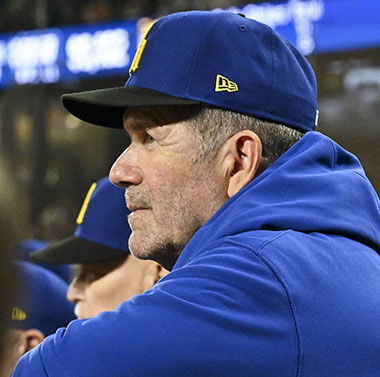 Edgar Martinez, back as Seattle batting coach (and not a moment too soon)
It's now been nearly a month—25 days, to be exact—since the Seattle Mariners finally got around to firing their manager (Scott Servais) and alleged hitting coach (Jarret DeHart) and replacing them with former Mariner players Dan Wilson and Edgar Martinez, respectively. I said at that time that despite their poor standing the change made me more bullish on the potential of the Mariners making the postseason than I'd been in months, and now, after 25 days, how are things looking?
Well, not great. But a better grade of not-great than before, to be sure.
Currently, the M's are four games over the .500 mark and 2 games out of a postseason berth (the ridiculous third Wild Card) with 12 games left to play. When Wilson took over, the team was at .500 and five games back of playoff standing. So it is marginally better, but time is running out, and it would still be a bit of an upset if they managed to get into the October tournament.
But the difference aside from the standings isn't marginal, it's enormous.
That improvement is, naturally, in the offense. Edgar taking over from the woefully ill-equipped DeHart as batting coach has changed the whole way of thinking for the team, away from the stupid stuff like launch angles and barrel rates and back toward the important things like contact and situational awareness. Here's a very simple stat to show the change in attitude:
Under Servais/DeHart: 18 sacrifice flies (128 games)
Under Wilson/Martinez: 11 sac flies (22 games)
That's a 500% increase in the simple act of getting a runner home from third base with a fly ball. Productive outs in general has been a key point in Edgar's tutelage so far, which you'd think would be a basic, known element for batters, but under DeHart the very idea was apparently discouraged.
But it isn't just making better outs that's improved, far from it. All team batting stats have been raised since Edgar came back to the dugout:
Team slash line under Servais/DeHart: .216/.301/.365
Team slash line under Wilson/Martinez: .254/.354/.416
Runs per game? Up from 3.9 to 5.2. Hits per game, walks per game, RBI per game, doubles per game, homers per game, all up. And strikeouts per game are down, though not significantly yet thanks to one 17-K game against the Rays; if you take that outlier out of the mix, Ks per game are down from 10.2 to 8.6. Still a ways to go on that front, but the way the rest of it is trending, that'll come in time.
Certain individual batters have gotten impressive results from consulting with the Hall of Famer, most notably Julio Rodríguez, Mitch Garver, and Luke Raley. Before the regime change, Julio was batting .260/.310/.364. Since the changeover, he's batting .278/.356/.489. It's the middle number, the on-base, that really stands out to me. Garver was having the absolute worst year of his career, and with no one to turn to for help was just getting worse and worse; he was at a miserable .165/.287/.327 under the old guard. With Dan and Edgar, his line is .267/.353/.433. Yes, only 34 trips to the plate, but what a difference. Then there's Raley, who had started out strong in the early season—a high-water mark of .301 in late May—before slumping down into the .220s. What's he done since Dan and Edgar took over? .304/.403/.679 with 15 RBI.
Victor Robles is another guy with huge numbers since Dan and Edgar arrived, but he's been the best hitter on the club basically since he got to Seattle at the beginning of June so it's not as clear that it's an Edgar influence. Still, check it out—Pre-Dan and Edgar: a very good .280/.340/.413; since Dan and Edgar: an astonishing .473/.546/.636.
Other guys aren't seeing big bumps in their numbers, but still some things of note, e.g. Cal Raleigh's average is still anemic, but his on-base mark has gone from a pre-change .303 to a since-then .341; newcomers Randy Arozarena and Justin Turner weren't around long during the Servais/DeHart time, so the comparison doesn't track, but Arozarena's slugged 100 points higher since the change and Turner's post-change slash is a stellar .290/.386/.464.
The Mariners as constructed throughout the year have had plenty of talent in their lineup, they were simply underachieving. Guys who were slumping or falling into bad habits had no one in-house to go to for help and things never got any better. Now they do. And we're starting to see who they really are.
It might be too late for 2024, but it bodes well for 2025.
Tagged
Baseball,
Seattle Mariners,
Edgar Martinez,
Posted on September 17, 2024 at 1:08AM | Permalink | |
Random dispatches
Some stray thoughts as I procrastinate doing important(ish) stuff this afternoon...
- I had umpiring to do last night, and as I arrived at the Woodland Park ballfields I was approached by one of my favorite players to ump over the years, a guy named Stephen. His team wasn't on my schedule, they were set to play on the adjacent field that my fellow umpire was handling, but he saw me deliver a gear bag to her and came up to talk to me. A few years back, Stephen was involved in (but by no means instigated) a confrontation between players on opposing teams in a game I was officiating, and after I'd sent combatants back to their corners and resumed the game, Stephen apologized to me and owned his (minor) part in what could have been an escalation of hostilities if I'd not intervened. That impressed me since he was basically the injured party and had cause to be upset. Since that game, whenever Stephen's team and I crossed paths it made my shifts a little more fun/less stressful since I knew at least one team would be well-behaved and good-humored. Anyway, last night Stephen said, "Hey, I'm glad you're here. This is my last game and I'm moving to New York next week. It's been a lot of fun playing in the league these past years and whenever we had you for our ump you made it that much better. The team loves you. Just wanted to you to know." After his game was over we chatted a little more about what he planned to do in NYC and he reiterated his praise. I say this not to toot my own horn—OK, it's partly to toot my own horn, I do enjoy my reputation, as one fellow staff member put it, as "the Ken Griffey Jr. of umpires" in the league—but to say to the Internet masses here that, if there's someone in your associative circle you appreciate for whatever reason, let them know. Odds are they aren't getting such feedback from their boss or co-workers or whomever else that might have authority, odds are they hear negative feedback far more frequently, and it can be more than helpful to know someone appreciates their effort in doing whatever it is they do. For my part, knowing Stephen and a few others appreciate how I run a game makes it a lot more tolerable when other people insult me or otherwise make an umping shift unpleasant. I'll miss Stephen! Thankfully I still have Megan, Yoon, Dae, Frankie, Robin, and everyone on The Leftovers (among others) occasionally peppering my shifts with good cheer.
- My new car is already in the shop, though this was half-planned. I knew from the inspection I had done it needed a couple of things dealt with right away, and that was supposed to be all handled this afternoon. Unfortunately there was a parts snafu and the mechanics can't finish until tomorrow. So I'll be relying on Ye Olde Metro Transit for getting to tonight's Mariner game and back. Alas.
- Speaking of the Mariners, despite their current second-place standing behind the Houston Astros in the American League West and third behind Minnesota and Boston for the consolation-prize Wild Card position, I'm more bullish on their postseason possibility than at any point since maybe May, and they had a big lead then. All because they finally sent Scott Servais and Jarret DeHart packing. Since Dan Wilson took over last Friday, with Edgar Martinez at his side, the M's are 3-1 (against San Francisco and Tampa Bay) and have gained 1½ games on the Astros, and of those three wins I am utterly convinced that they would have lost at least two of them under the Servais regime because critical runs were scored by runners from third without benefit of a hit. Which had been a foreign concept under DeHart. Edgar made a point of telling the press that one of his goals was to emphasize situational hitting and another was to reduce strikeouts, and it paid off immediately. Even the San Francisco Giants' broadcast team noticed, as they remarked over the weekend that Seattle batters were changing their approach when they had two strikes on them, noting some guys choking up on the bat to shorten their swing and what appeared to be deliberate intent to foul off certain pitches. Shortstop Leo Rivas delivered a game-winning hit in such an at-bat on Friday. Sunday two runs scored on grounders that Julio Rodriguez and Randy Arozarena busted hard out of the box on to avoid double-plays. None of that would have happened before. Yesterday the M's beat Tampa Bay with home runs, more like the earlier regime preached, but they were "happenstance homers," not borne of swinging for the fences but of swinging for a line-drive. Josh Rojas and Luke Raley seem particularly better since the regime change; Wilson even had Rojas in the starting lineup against a lefty yesterday, something Servais never did, and what do you know, Josh was 2-for-3 against said lefty, a line single, a hard double off the wall, and lined hard just barely foul before striking out on a tough pitch. Plus he stole a base and scored the only non-homer-delivered run of the game. There have been bunts and bunt attempts in interesting situations by batters other than Luke Raley. Andres Muñoz was not called in too early from the bullpen in a close game. Surprisingly good reliever Collin "Principal" Snider was not yanked after getting in a spot of trouble but was allowed to get out of it himself. Dan is still batting Cal Raleigh third in the order, which I don't like, but it's only been four games and Victor Robles hasn't been available to lead off. We'll see if that changes soon.
- Shit, I've procrastinated too long. Gotta go.
Tagged
Baseball,
Seattle Mariners,
Umping,
Cars,
Posted on August 27, 2024 at 4:44PM | Permalink | |
Good news, everyone!
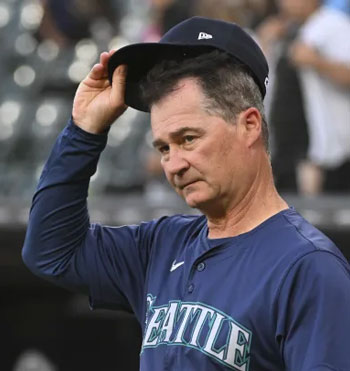 Don't let the door hit you on the way out, dude
It's been a pretty great week in the news, largely because of the absolute delight that has been the Democratic National Convention. So many standout speeches and fantastic energy that I could write long posts about and maybe will.
But not today. Because the best news from today (so far) comes from Your Seattle Mariners. The headline:
Mariners fire manager Scott Servais amid AL West slide
To quote my friend Mack, whose reaction was much like mine only slightly sanitized, "AMFT." (The A stands for "about," the T for "time," and the middle letters for a descriptor Samuel L. Jackson uses for snakes and planes.)
You may recall my posts about how the Mariners have been wildly inconsistent this year, or how they were pathetic as a club because batters having trouble had no support from their own dugout/clubhouse and had to seek help elsewhere. Or how the Mariners absolutely suck at driving in runners from third base, generally at worst a 50/50 proposition but with them 40% is a reach.
You may also recall my stance from a couple years back that the only reason the Mariners could possibly get into the postseason going forward is because we now live in the Manfred Era of participation-trophy-level playoffs and roster rules designed to protect managers from their own dumbness, and even then if the M's were to get in they wouldn't last long. And that would hold true until significant changes were made in management.
Well, someone with the power to do something about it finally reached the same conclusion.
Also canned, just as importantly, was alleged hitting coach Jarret DeHart, a primary figure in a couple of the posts linked above and a clear liability to the team.
The firings come at the conclusion of a road trip that saw the M's lose eight of nine games and fall from a first-place tie to five games behind the Houston Astros in the division. Going back a bit farther, since June 18th—when the M's held a 10-game lead over the Astros—Seattle has a winning percentage of just .377 (20-33), including 18 losses by two or fewer runs and 16 losses when their starting pitcher turned in a quality start (6+ innings with <=3 earned runs allowed). And over those 53 games, the Mariners' offense has managed to post a batting line of .208/.300/.354 with an average of 10½ strikeouts per game. For the non-baseball stat nerds, that's bad.
The frustrating thing is that none of this is new. This has been standard operating procedure for the Mariners for four years, and for longer than that no matter how good the roster of personnel was the lineup underachieved. It's astonishing that the team won 88 or more games in four of Servais' nine years at the helm, and all of the credit for that goes to the pitchers. Even there, Servais had issues—he had such a tendency to call on the worst possible option from the bullpen that I actually believe that certain relievers were traded just so Servais wouldn't keep bringing them into critical game situations (looking at you, Dan Altavilla, Ryne Stanek, Rafael Montero, Taylor Williams, et.al). Those unlikely win totals masked what I always thought were Servais' flaws and probably kept him around despite what should have been obvious reasons not to. In addition to the weird bullpen decisions there was the insistence on a three-man bench (before Manfred's reign mandated at least four), odd lineup constructions, and basic inflexibility when it came to deviating from pregame decisions regardless of what happened on the field.
Hopefully this will be a "better late than never" situation rather than one of "too little too late." The M's are still just five games out thanks to Houston's terrible start to the season. It's not likely that they can catch the Astros, but nor is it all that unlikely with five and a half weeks to go in the season (including three games in Houston).
The new manager will be Dan Wilson, former Seattle catcher and a guy who always struck me as possible manager material. He's had no coaching experience other than as a roving minor-league instructor for the M's here and there, but there have been successful big-league managers that came in cold—Craig Counsell, for one, who took Milwaukee to the postseason five times in eight years; also Aaron Boone, though when your first gig is the Yankees you're already a step up. Of course there's also David Ross and Gabe Kapler, who didn't fare so well.
No word yet on a new batting coach. That might be important. If the M's just go with DeHart's assistant for the rest of the year I doubt much will improve, but just being without DeHart should help. The rumor mill has Edgar Martínez returning to coach in some capacity. We'll see.
I've got tickets for next Tuesday night. Who wants to go?
Tagged
Baseball,
Seattle Mariners,
Posted on August 22, 2024 at 5:40PM | Permalink | |
Sweep the Mets
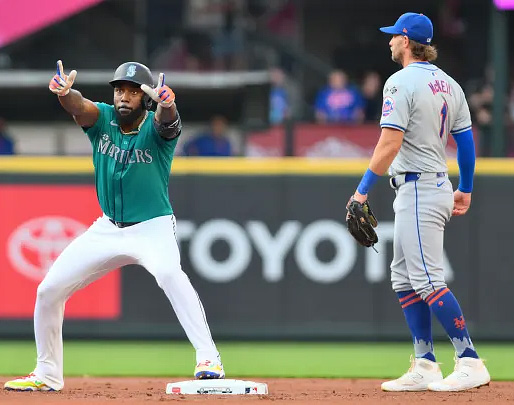
B eat the Mets, beat the Mets, step right up and sweep the Mets...
The 2024 Seattle Mariners continue to confound, having just completed a three-game sweep of the New York Mets in which they outscored the visiting Gothamites 22-1. Coming into the series, the Mets were, by record, a superior team and holding a playoff position in the National League. Now they are not.
In the previous series, the Mariners were bested two-games-to-one by the well-under-.500 Detroit Tigers and were saved from a three-game sweep the bad way by the inexperience of a Detroit rookie right fielder, who let the game-winning runs score after misplaying a base hit into a walkoff double. Detroit outscored Seattle 13-8 in that series, including the three two-out runs that flipped that final game in Seattle's favor.
There just is no consistency with this team. At least, not in terms of wins and losses; they had one good hot streak when they won eight of nine in June, but they followed that up with a slump that saw them drop 10 of 13. Hey, maybe they're finally on a roll! Ugh, now they're back to stinking up the place.
It's frustrating, because they could be truly great. They have a pitching staff that's the envy of the baseball world, but as has been the case for years, those pitchers have to make do with minimal support from the lineup. Prior to the late-July trades, there was no one in the Seattle offense that could be relied upon for much of anything except a whiff when putting the ball in play is what mattered.
As discussed yesterday, this is a self-inflicted would on the Mariners' part. The front office at some point decided to go all in on the idea of home runs as the only goal of batting. They hired coaches to perpetuate that thinking, and since 2020 those coaches include one Jarret DeHart. For the mini-season of 2020 and for 2021, DeHart was the number-two guy under Tim Laker, who at least was a former big-league catcher with experience to shape his methods even if he proved to be a rather poor batting coach. Since then, DeHart has been the top dog in the offensive coaching department despite never playing professional ball and going into coaching straight out of college—when the joined the M's in ’20, he was younger than rookies Sam Haggerty, Braden Bishop, and Jake Fraley; the same age as second-year big-leaguer Ty France and third-year player J.P. Crawford; and barely older than rookies Kyle Lewis and Evan White.
Now, experience does not equal effectiveness. The M's have had plenty of coaches and managers that prove that. But it helps. It's not only something to inform one's own thinking, it's something that players will rely on when taking instruction. Only with DeHart, almost every guy on the squad has more experience hitting a baseball than he does. Even young Julio Rodríguez was in pro ball while DeHart was still a student at Tulane. None of DeHart's experience involves life as a pro player, not even the low minor leagues, and once someone gets to the Majors the issues coaches face with players are as much psychological as mechanical (if not more so). I can't imagine a player in a slump going up to DeHart and asking for tips on how to work out of it and getting anything back that is relatable.
We've got several years' worth of history now with DeHart in the dugout, so I decided to look at the numbers. Here's a sampling (bold = MLB worst):
| Year | W-L | R/G | BA | OBP | SLG | BA rank | OBP rank | K rank | 3B <2 out RBI / MLB Avg | K% | 3B <2 out K% | Prod. out % / MLB Avg |
| 2020 | 27-33 | 4.23 | .226 | .309 | .370 | 24th | 27th | 22nd | 54.5% / 49.3% | 25.0% | 19.8% | 28.1% / 25.3% |
| 2021 | 90-72 | 4.30 | .226 | .303 | .385 | 30th | 28th | 26th | 46.5% / 49.9% | 24.8% | 23.6% | 23.0% / 26.4% |
| 2022 | 90-72 | 4.26 | .230 | .315 | .390 | 27th | T15th | 20th | 46.4% / 50.9% | 22.8% | 18.9% | 23.5% / 26.9% |
| 2023 | 88-74 | 4.68 | .242 | .321 | .413 | 22nd | 16th | 29th | 41.7% / 50.1% | 25.9% | 27.1% | 22.8% / 26.8% |
| 2024 | 63-56 | 4.01 | .218 | .303 | .371 | 29th | 25th | 30th | 42.9% / 51.1% | 27.8% | 26.2% | 18.7% / 28.0% |
We can probably discount 2020 since it wasn't a real season with only 60 games. Still, the only thing better then was scoring runners from third, otherwise the whole DeHart era holds up as being terrible. The fact that the Mariners won as many games as they have in this span is shocking and shows how good they are on the pitching side of things. It's a real Jeckyll/Hyde coaching staff—hitting is the terrifying monster, pitching and defense (under Pete Woodward and Perry Hill, respectively) are the genius doctor.
The biggest item in that table to me is the productive out rate. Being able to advance runners is a necessary skill for any batter, but the M's just don't care about it. The scoring runners from 3rd with 0 or 1 out is in part a subset of the productive out rate, it just happens to be the most important one and the strikeout rates tell us that there is no adjustment being made for situational hitting: an easy RBI opportunity when a run can be batted in without needing a hit is treated no differently than any other trip to the plate.
But let's get a basis for comparison here. In contrast to the DeHart years, here's the same number set from the years Edgar Martínez was batting coach:
| Year | W-L | R/G | BA | OBP | SLG | BA rank | OBP rank | K rank | 3B <2 out RBI / MLB Avg | K% | 3B <2 out K% | Prod. out % / MLB Avg |
| 2016 | 86-76 | 4.74 | .259 | .326 | .430 | 10th | 9th | 17th | 49.7% / 50.5% | 20.7% | 21.6% | 28.0% / 29.4% |
| 2017 | 78-84 | 4.63 | .259 | .325 | .424 | 11th | 15th | 22nd | 50.0% / 50.9% | 20.6% | 20.9% | 26.6% / 27.9% |
| 2018 | 89-73 | 4.18 | .254 | .314 | .408 | 10th | 18th | 3rd | 50.0% / 49.6% | 20.1% | 20.3% | 27.0% / 27.3% |
Edgar wasn't the greatest coach, it turns out being the best at doing something doesn't necessarily translate into being the best at teaching it. But his experience surely counted for something: Though the runs per game and the on-base rate aren't much different, the productive out numbers are at least around league average and the strikeouts are significantly better. And for all of DeHart's emphasis on power hitting, the slug rates are generally worse under his reign.
I was happy to see the sweep of the Mets. It kept Seattle tied for the top spot in the American League West. But if that productive out rate was even average—just average!—this team, with this staff of starting pitchers, would be running away with the division and already plotting postseason strategies.
Clearly, I had too much time on my hands today.
Tagged
Baseball,
Seattle Mariners,
Posted on August 12, 2024 at 9:14PM | Permalink | |