

History break
Society continues to crumble around us, as Secretary of Terrorism Kristi Noem considers Hunger Games-style reality TV competitions for immigrants and the Speaker of the House says crime is OK so long as it's done openly. What a time to be alive, eh?
With all this happening one has to find other things to occupy one's mind or else go utterly mad, so I've been reading a book about baseball in the 1970s. My personal baseball fandom didn't really begin until maybe 1978—that's the first World Series I think I watched any of (Yankees-Dodgers, FWIW)—so most of what I've been reading so far is new-to-me anecdotes and bits of history along with more details to things I sort of knew about already in the broad strokes.
Like Astroturf. Though the synthetic green grass substitute was basically created for the Astrodome after the newly-rechristened Houston Astros moved into the world's first indoor baseball facility and discovered that a) a ceiling made of clear lucite panels makes for a great deal of glare and heat during the day; and b) remedying that by painting the lucite panels gray meant grass won't grow on the field. Hence, Astroturf. They incidentally also discovered that plastic grass was way cheaper to maintain than real grass, so when the plethora of new, multipurpose municipal stadiums started opening up they all featured Astroturf. Even the nice one—Royals Stadium in Kansas City, still in use today despite misguided efforts by some to fund a replacement—used the fake stuff, at least until 1995 (when the trend was moving to the retro-style baseball-only ballparks in fashion today). Candlestick Park in San Francisco wasn't one of these new behemoths, having opened in 1960, but it too converted to Astroturf for ten years. Horrible surface to play on. Well, "surface"; the surface was not terrible—though watch out for rug burns if you dove for a fly ball on it—it was the concrete underneath that made it truly unpleasant. Hard, unforgiving on knees and ankles, and then the extra fun of playing on it on a summer afternoon when it just reflected all the heat back up and made for field temps of 140 degrees (often in Midwest humidity). Thankfully bean-counters were ultimately defeated by players and aesthetics. Nowadays there are five teams that use artificial grass (oddly, the Astros are not among them) in their parks—all indoor or convertible facilities—but it's not the Astroturf of old, it's a rubbery grass-like surface atop a sandy subsurface that promotes drainage and doesn't feel like running on stone, and it's only used because growing grass is a challenge/impossibility in those stadia.
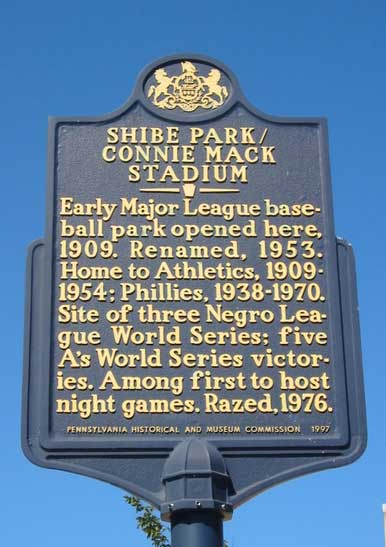
Anyway, the Astroturf train of thought brought me to the Philadelphia Phillies, who moved into their concrete and Astroturf home of Veterans stadium in 1971. That I knew. What I hadn't known was that they were desperate to do so because of their prior digs in Connie Mack Stadium, which the Phils had shared with and rented from the Philadelphia Athletics until the A's moved to Kansas City and which was apparently a nightmare of sunk costs. But it was the tale of the last game at Connie Mack that I wanted to share here today. Construction of Vet Stadium had been delayed a year, so the Phils had to tough out a final season at Connie Mack in 1970, the final game of which was marketed to fans with lots of promotions, giveaways, parts of the ballpark would be raffled off, and a helicopter was to fly down, pick up home plate, and fly it to The Vet at the end of the postgame ceremonies.
However, this was in Philadelphia.
It may be known as "the city of brotherly love," but Philadelphia sports fans are ruthless. (Go to any Phillies game and you'll see.) Throughout the game, fans could be heard hammering things, prying stuff out of foundations, basically stealing anything they could get their hands on as souvenirs of Connie Mack Stadium. When the game ended fans overwhelmed the field to take sod, dirt, the pitching rubber, advertising signs, pieces of the outfield wall, bullpen rosin, anything not bolted down and quite a few things that were bolted down. (After Oscar Gamble singled in Tim McCarver to win the game in the bottom of the tenth, he saw the crowd coming and yelled to his teammates, "Run, man, run like hell. We’ll be happy later.") Only home plate was spared since it was surrounded by officials who still needed to take it to Veterans Stadium. No postgame ceremonies happened, the stuff that was to be raffled off had all been stolen, the giveaway seat-slat replicas had been used as prybars and bludgeons, the emergency room at Temple University hospital was filled with Connie Mack Stadium chaos injuries, and the ballpark was in shambles.
It's a fun story, detailed here as "a day that would live in infamy."

A section of Connie Mack Stadium post-carnage
Tagged
Baseball,
History,
Posted on May 19, 2025 at 7:24PM | Permalink |  |
| 
Comments
No one has commented on this page yet.
Post your comment
RSS feed for comments on this page | RSS feed for all comments